The Memorial Plaque: A Closer Look
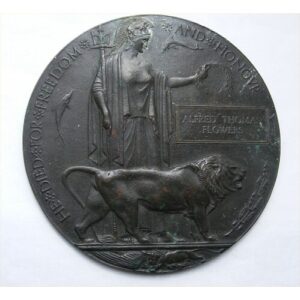
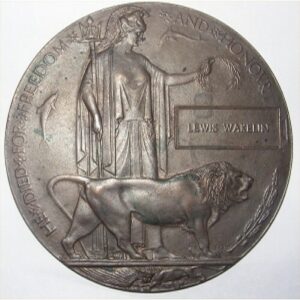
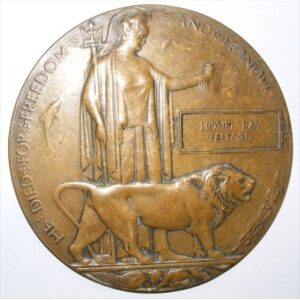
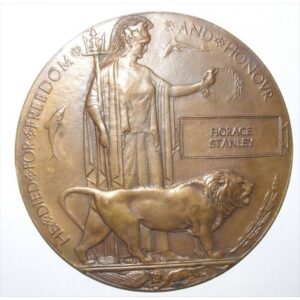
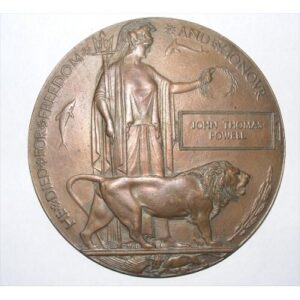
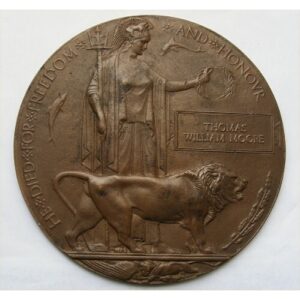
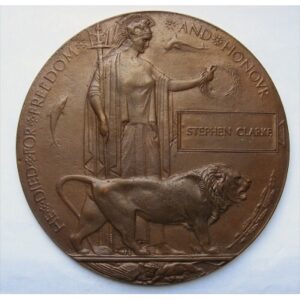
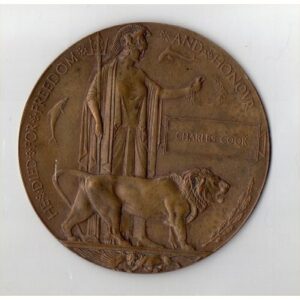
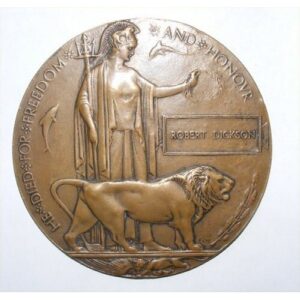
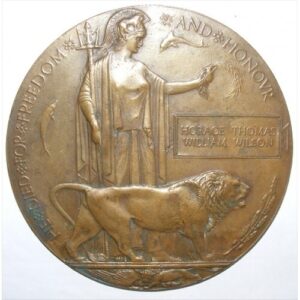
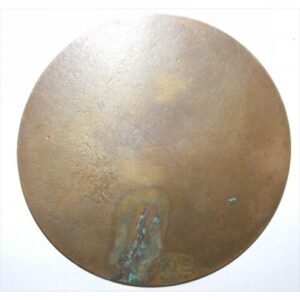
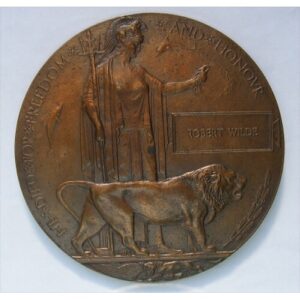
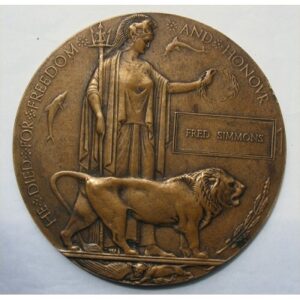
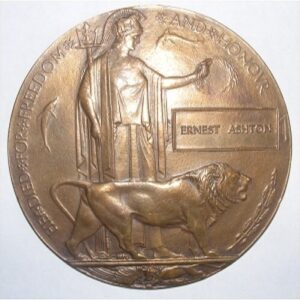
Cast in bronze and measuring 120mm (4.7 inches) across, the Next of Kin Memorial Plaque earned its grim nickname the “Dead Man’s Penny” from its resemblance to the much smaller penny coin of the day. Some 1,355,000 were issued to the families of British and Empire personnel who died as a result of the Great War, consuming around 450 tonnes of bronze. Issues continued well into the 1930s for those who died later of war-related causes.
The Design Competition
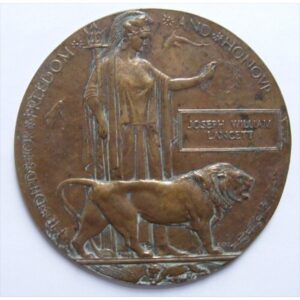
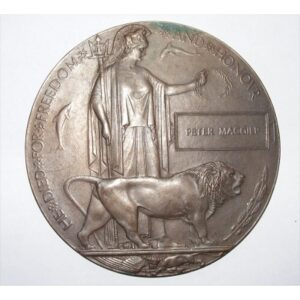
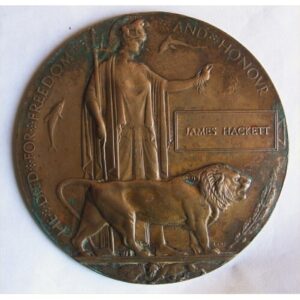
The design was settled by open competition announced in 1917, with entries judged anonymously under pseudonyms. Of more than 800 submissions, the winning entry “Pyramus” was the work of Liverpool sculptor and medallist Edward Carter Preston, announced in March 1918 and awarded a prize of £250. His initials, E.CR.P, appear just above the lion’s forepaw the first detail a collector should look for.
Reading the Iconography
Britannia stands at the centre, trident in her right hand, extending a laurel wreath over a rectangular tablet bearing the recipient’s full name. Crucially, no rank is given a deliberate statement that in death the sacrifice of every man and woman was equal. Two dolphins flank her, representing British sea power, and the legend “He died for freedom and honour” runs around the rim. At Britannia’s feet a lion stands defiant; beneath it, easily missed, a second small lion tears at a winged creature the Imperial German eagle.
Maker’s Marks & Varieties
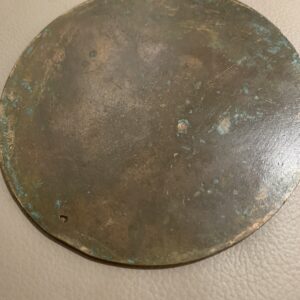
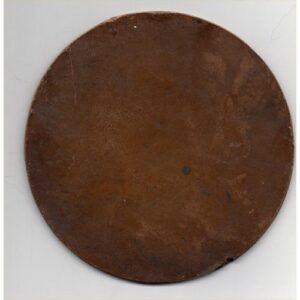
Production began at the Memorial Plaque Factory at 54–56 Church Road, Acton, in 1919. Early Acton plaques carry no number; later ones bear a number stamped behind the lion’s back leg. In December 1920 manufacture moved to the Royal Arsenal, Woolwich — these are identifiable by a circled “WA” mark on the reverse and a number relocated to between the lion’s tail and leg.
The most sought-after variety is the “SHE” plaque. Carter Preston narrowed the “H” of “HE DIED” so an “S” could be inserted for female recipients. Only around 600 women’s families received one, making the “SHE” plaque a genuine rarity. A separate small commercial miniature (roughly 5cm) also exists, of private manufacture and unrelated to the official issue.
The Plaque & Scroll
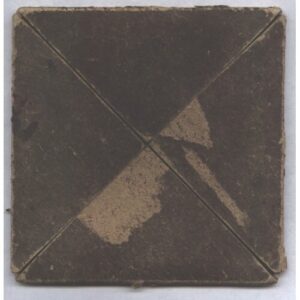
The plaque did not travel alone. It was accompanied by a commemorative scroll bearing the deceased’s name, rank and regiment, often with a printed message from the King. Plaques were posted to next of kin in a stout card folder inside a plain HMSO envelope — items that, when surviving alongside the plaque today, considerably add to both the historical record and a piece’s collectable value.